


The
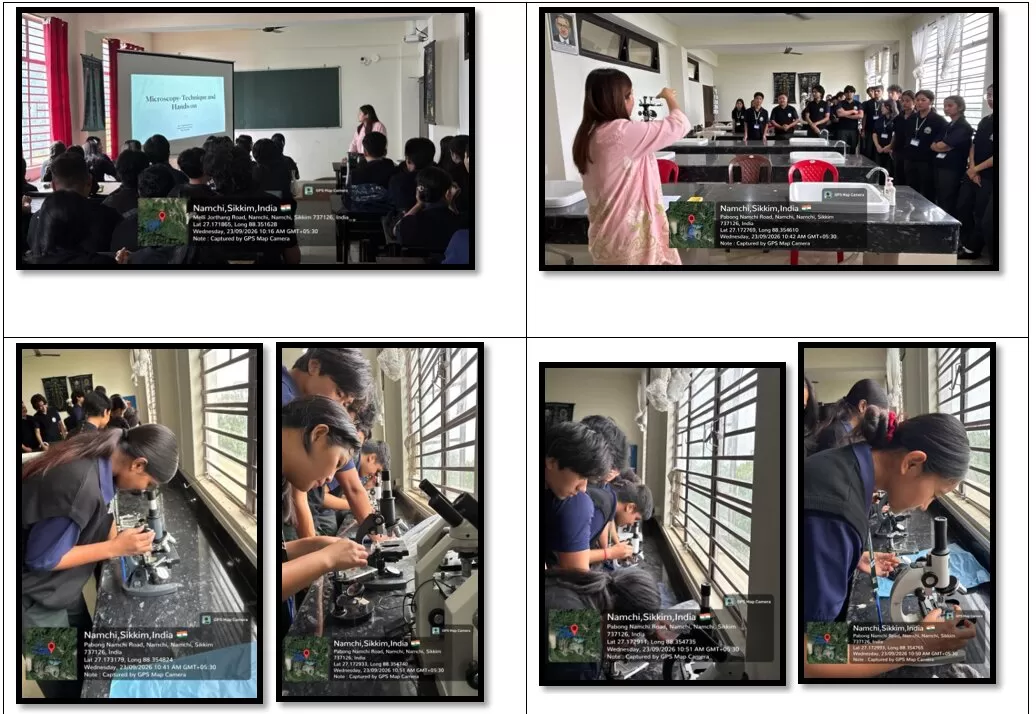
Department of Zoology, Sikkim Government College, Namchi, organized a hands-on training
programme on the use of the microscope for newly
admitted students of Zoology Major and Minor on 23 September 2026. The programme was organized with the
objective of introducing students to the basic principles, parts, handling, and
proper use of the microscope, which is an essential instrument in zoological
and biological studies.
The training
began with an introductory session in which students were familiarized with the
different parts of a compound microscope, including the eyepiece, objective lenses, stage, stage clips,
diaphragm, condenser, coarse adjustment knob, fine adjustment knob, and
illumination system. The students were also explained the functions of each
component and the importance of handling the instrument carefully.
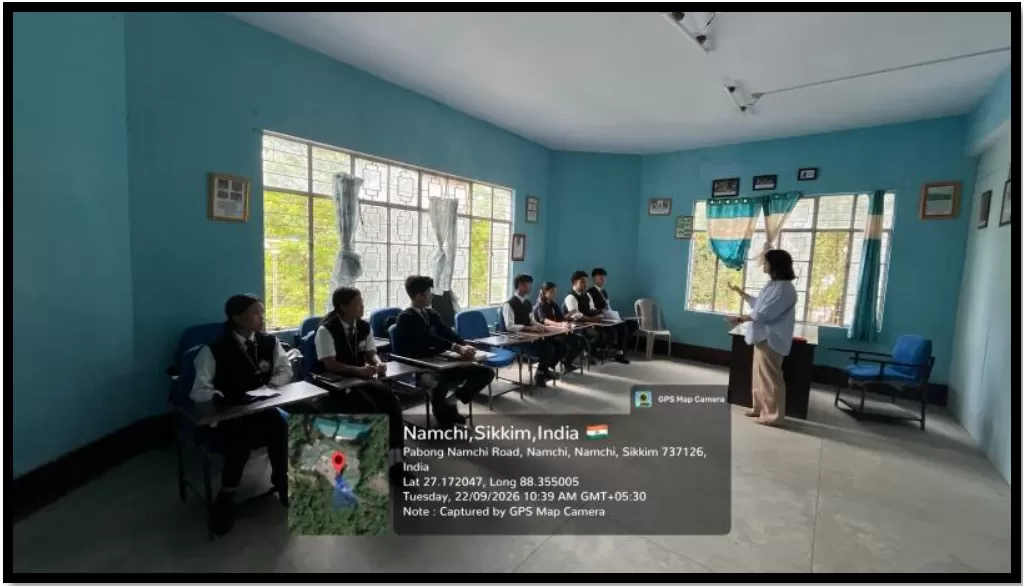
A practical
demonstration was then conducted by Ms. Yagchen Bhutia, Assistant Professor and
assisted by Ms. Raksha Sharma, Lab. Assistant of Department of Zoology.
Students were instructed on the correct procedure for carrying, placing,
focusing, and adjusting the microscope. They were taught
how to begin observation under low-power magnification and subsequently shift
to higher magnification while maintaining proper focus and illumination. The
students also received guidance on preparing and positioning slides for
microscopic observation.
Following the
demonstration, the students were given an opportunity to operate the
microscopes individually under the supervision of the faculty members. They practiced focusing specimens,
adjusting the light, changing magnification, and observing microscopic
structures. The hands-on component of the training enabled the students to gain
confidence in using laboratory instruments and helped them understand the
importance of careful observation in zoological studies.
The programme
also emphasized microscope care and laboratory safety, including proper cleaning of lenses, careful handling of slides,
appropriate storage of the instrument, and maintaining cleanliness in the
laboratory.
The training
was interactive and engaging, with students actively participating and asking
questions throughout the session. It provided the newly admitted students with
a useful foundation in basic microscopy and laboratory practices that will
support their practical classes and future studies in Zoology.
The programme
concluded with a brief interaction between the students and faculty members.
Overall, the hands-on training was a valuable academic activity that helped
familiarize the new students with one of the most important instruments used in
Zoology and strengthened their basic laboratory skills.
Submitted by:
Dr.
Kamal Poudyal,
HOD,
Department of Zoology