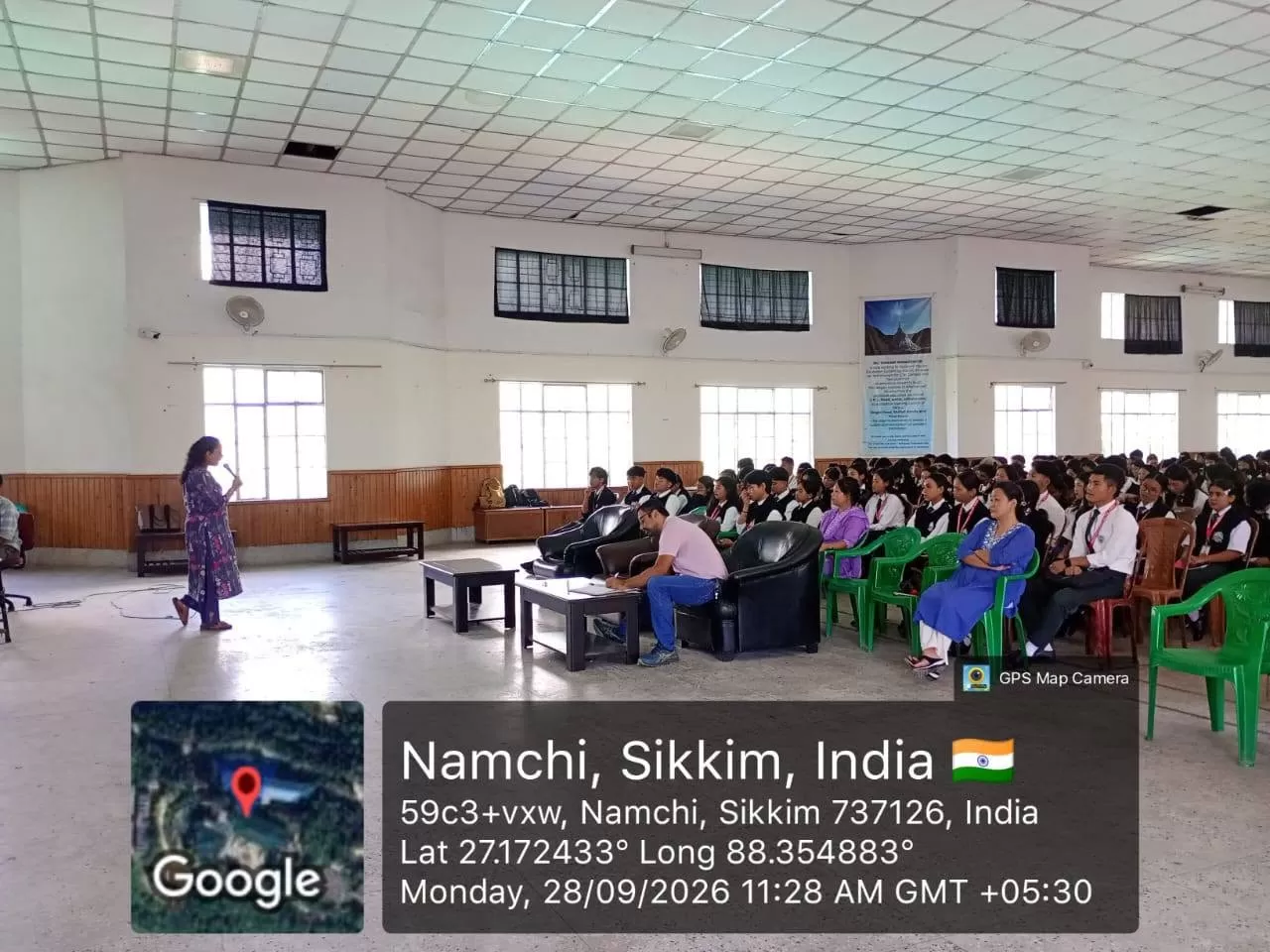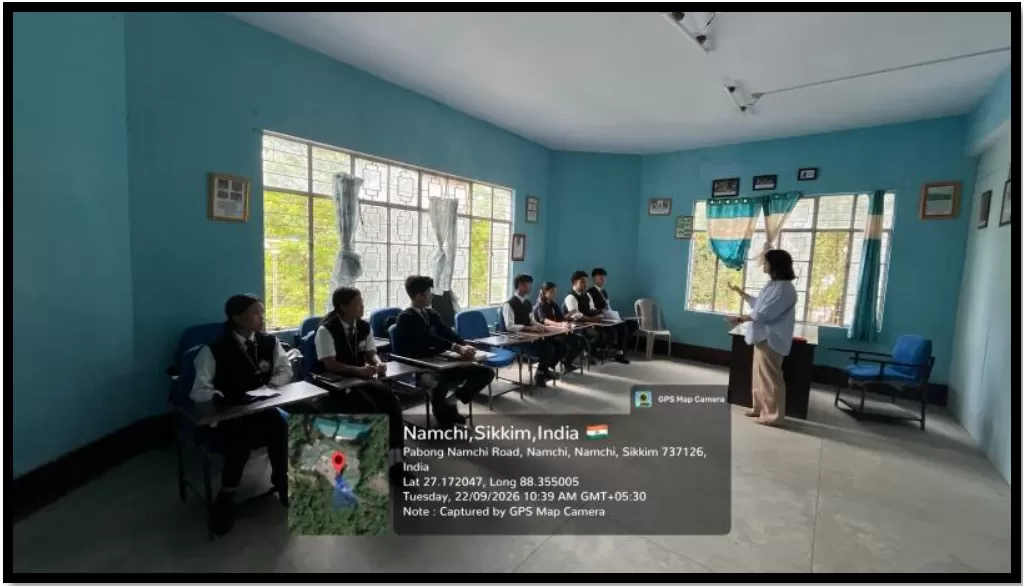




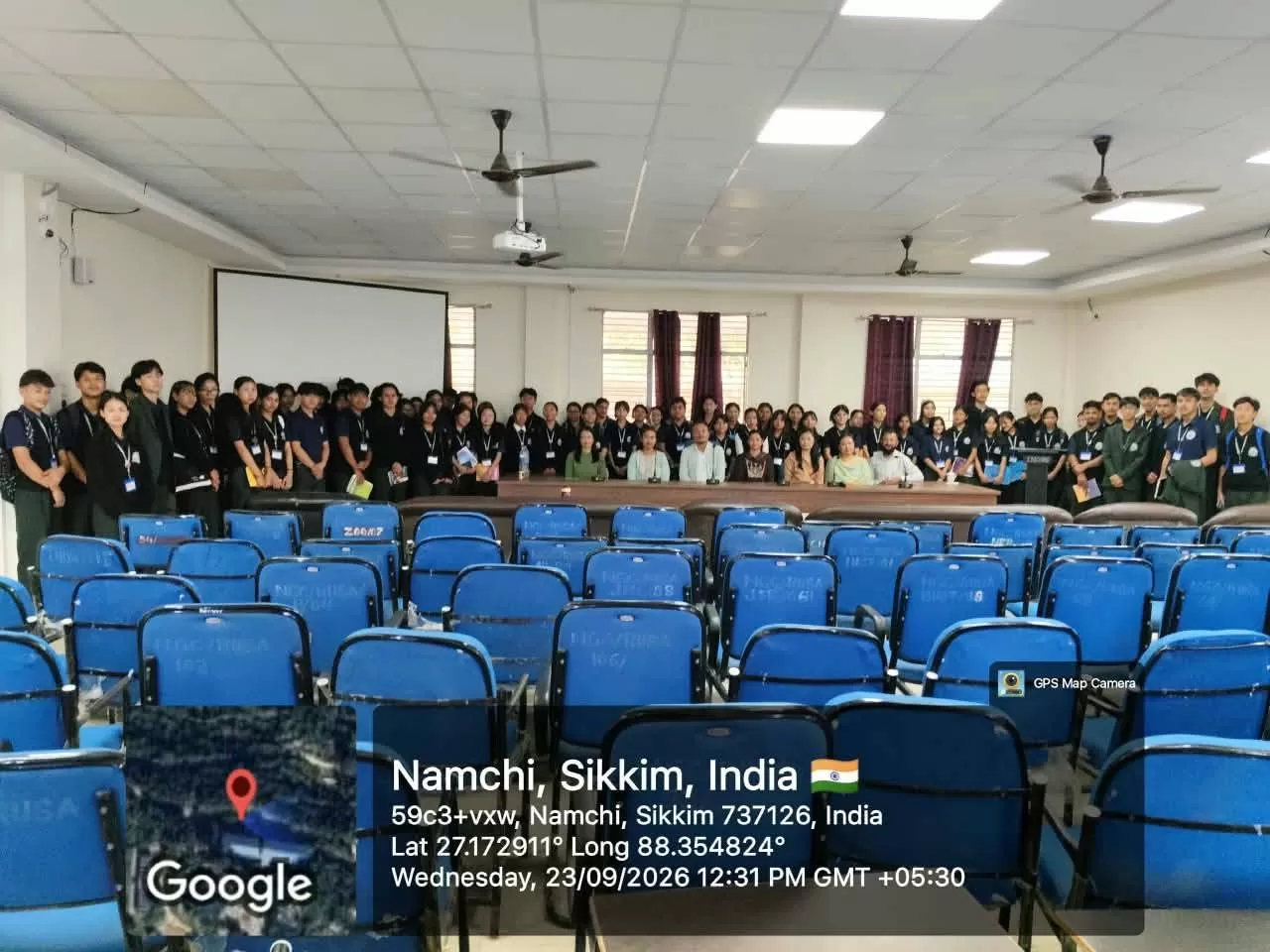
A Talk on Cyber security was organised by the Legal Literacy Cell of Sikkim Government College, Namchi, in collaboration with the Internal Quality Assurance Cell (IQAC), on 23 September 2026 at 11:00 AM in the Seminar Hall of the College. The programme was organised to create awareness among students regarding cybercrime, online fraud, phishing, digital-payment scams, account security, and the responsible use of digital technology.
The programme was organised in the pursuance of the Memorandum of Understanding (MoU) signed between Sikkim Government College, Namchi, and Sikkim Institute of Science and Technology (SIST), Chisopani, on 25 August 2026. The primary objective of this MoU is to foster a mutually beneficial institutional collaboration by establishing a framework for reciprocal sharing of institutional infrastructure, laboratory facilities, and technical expertise for research, academic projects, and training purposes. The Cybersecurity Awareness Programme was one such collaborative academic initiative organised under the framework of the MoU.
The programme was conducted by the Legal Literacy Cell of Sikkim Government College, Namchi. The Cell comprises Dr. Susan Rai, Convener; Mrs. Sushmita Gurung, Co-Convenor; Dr. Santosh Subba, Member; and Mrs. Zangmoo Lepcha, Member. The programme was attended by first-semester students of the Departments of Sociology and Political Science of Sikkim Government College, Namchi, along with faculty members from Sikkim Institute of Science and Technology, Chisopani.
The programme was hosted by Mrs. Sushmita Gurung, Co-Convenor of the Legal Literacy Cell. The program commenced with the warm welcome address by Dr. Susan Rai where she briefly explained the meaning of cybersecurity and emphasised the importance of awareness in protecting oneself from the growing risks of cybercrime, online fraud, and misuse of personal information in the digital age. The invited guests included Ms. Repshika Pradhan, Assistant Professor and Resource Person; Mr. Prashant Pradhan, Assistant Professor; and Ms. Pragya Pradhan, Faculty Member.
The technical session was conducted by Ms. Repshika Pradhan, Assistant Professor, SIST, Chisopani. She began the session by interacting with students about their use of smartphones, social-media platforms, digital-payment applications, and other online services. She explained that cybersecurity is not only an issue related to Information Technology but also a responsibility of every digital user.
During the session, Ms. Pradhan introduced students to the fundamental principles of cybersecurity, including the CIA Triad: Confidentiality, Integrity, and Availability. She discussed various cyber threats such as phishing emails and messages, suspicious links, malware, cracked software, online banking fraud, UPI scams, public Wi-Fi risks, social engineering, account hacking, and online impersonation. She explained how cybercriminals often create panic and urgency through messages or calls claiming that a bank account, mobile number, email account, or college account will be blocked unless immediate action is taken. Ms. Pradhan also highlighted the growing misuse of Artificial Intelligence in cybercrime, particularly in the form of voice phishing, personalised scams, voice manipulation, and deepfake content. She informed the students that unusual calls, messages, payment requests, videos, or voice recordings should always be independently verified, even if they appear to have been sent by a familiar person.
The session also focused on practical steps for digital safety. Ms. Pradhan emphasised the importance of using strong passwords and enabling Multi-Factor Authentication (MFA) for important online accounts such as email, social-media platforms, banking applications, and digital wallets. She talked about the platform “Have I Been Pwned?”, which can be used to check whether an email address has appeared in known data breaches and also highlighted the Cyber Crime Helpline, 1930. She further explained the 10-Second Rule, advising that whenever a suspicious message, call, link, payment request, or urgent situation is encountered, one should pause for ten seconds and ask: “Does this make sense? Can I independently verify it?” It was also advised to remain calm during a cyber incident, secure the affected account, preserve relevant evidence, and report the matter promptly.
Following the main session, Mr. Prashant Pradhan, Assistant Professor, SIST, addressed the questions raised by the participants and clarified their concerns regarding cyber safety and online fraud and reinforced the importance of safeguarding personal and financial information. He spoke about OTP fraud, account fraud, online-payment scams, and the need to exercise caution while using digital platforms. He encouraged students to remain alert and to adopt safe and responsible online practices in their daily lives.
At the close of the programme, Dr. Susan Rai presented a token of appreciation to Ms. Ripsika Pradhan. Dr. Santosh Subba delivered the Vote of Thanks, expressing gratitude to the resource persons, organisers, and participants. The programme was informative and helped participants understand cyber threats, adopt safer online practices, and use digital technology responsibly.
Report Prepared by
Legal Literacy Cell
Sikkim Government College, Namchi.